
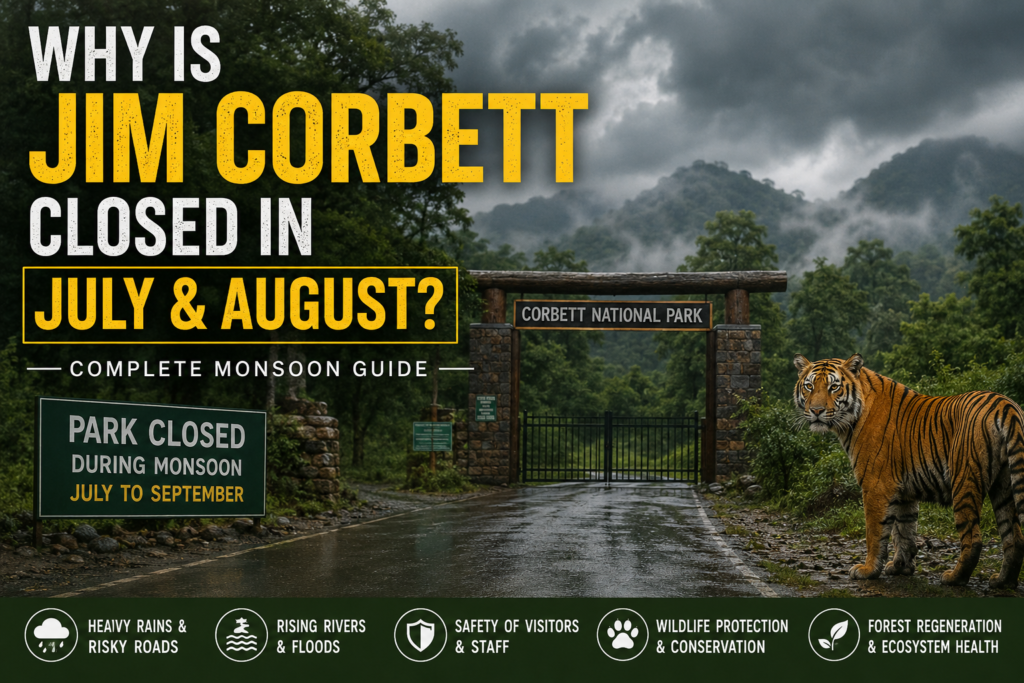
Jim Corbett National Park is one of India’s most popular wildlife destinations, attracting visitors from across the country and around the world for its famous jungle safaris, Bengal tigers, elephants, birds, and beautiful forest landscapes. However, many travelers planning a Jim Corbett trip in July or August are surprised to learn that several parts of the park may be closed to tourists during the monsoon season.
So, why is Jim Corbett closed during July and August? Is the entire park closed? Can you still visit Corbett during the monsoon? And when should you plan your Jim Corbett Safari Booking?
Let’s understand everything you need to know.
Is Jim Corbett National Park Closed in July and August?
The short answer is yes, many tourism areas of Jim Corbett are closed or have restricted access during the monsoon season. However, it is important to understand that saying “Jim Corbett National Park is completely closed from July to September” can be an oversimplification.
According to Uttarakhand Tourism, Corbett National Park is closed during the monsoon from July to September. At the same time, the park is divided into several tourism zones, and access and safari availability can vary depending on the zone, weather conditions, and forest department regulations.
Therefore, travelers should always check the latest official availability before planning a safari during the monsoon.
Why Is Jim Corbett Closed During the Monsoon?
The main reason for the seasonal closure is heavy monsoon rainfall and the challenging conditions it creates inside the forest.
Jim Corbett is located in the foothills of the Himalayas, where the monsoon can bring significant rainfall. During July and August, the forest becomes much wetter, and conditions on forest roads can change quickly.
The closure is primarily related to visitor safety, forest protection, wildlife conservation, and difficult travel conditions.
Here are the main reasons.
1. Heavy Rainfall Makes Forest Roads Difficult
One of the biggest challenges during the monsoon is the condition of roads and safari tracks.
Safari vehicles travel through natural forest routes, many of which are unpaved or surrounded by streams and river crossings. Heavy rain can result in:
- Muddy roads
- Waterlogged safari tracks
- Slippery terrain
- Temporary flooding
- Damaged roads
- Increased risk of landslides in some areas
These conditions can make it difficult and potentially unsafe for safari vehicles to travel deep inside the forest.
For tourists, a jungle safari should be an enjoyable experience. During extreme weather, operating safari vehicles in difficult conditions can increase risks for both visitors and staff.
2. Rivers and Seasonal Streams Can Become Dangerous
Jim Corbett is crossed by rivers and numerous seasonal streams. During the monsoon, water levels can rise quickly after heavy rainfall.
This is particularly important because safari routes may cross or run alongside natural water channels.
A route that is safe during the dry season may become difficult to cross after heavy rainfall. Sudden increases in water flow can also affect access to certain parts of the forest.
For this reason, authorities may restrict tourist movement in areas where conditions become unsafe.
3. Protecting Wildlife During the Breeding Season
The monsoon is an important period for the natural ecosystem.
The forest becomes lush and green, water sources are replenished, and vegetation grows rapidly. Many animals also become more active as the ecosystem responds to the seasonal rainfall.
Reducing tourist activity during this period helps minimize human disturbance in sensitive forest areas.
Wildlife tourism needs to balance tourism with conservation. Seasonal restrictions can help give animals and their habitats a quieter period with less human activity.
4. Monsoon Is Important for Forest Regeneration
Rainfall plays an essential role in maintaining the health of the Corbett ecosystem.
The monsoon helps:
- Replenish water sources
- Support vegetation growth
- Maintain grasslands
- Improve soil moisture
- Support insects and other small organisms
- Contribute to the overall food chain
The result is a dramatically greener forest landscape.
While tourists may not always be able to explore the same safari routes during this period, the monsoon is extremely important for maintaining the ecosystem that makes Jim Corbett such a special wildlife destination.
5. Safety of Tourists and Safari Staff
Tourist safety is another major consideration.
A jungle safari takes visitors into a remote natural environment. During heavy rainfall, conditions can change quickly.
Potential challenges include:
- Poor road conditions
- Reduced visibility
- Waterlogged tracks
- Falling branches
- Flash flooding in vulnerable areas
- Difficult vehicle movement
Keeping certain tourism zones closed during periods of heavy rain helps reduce these risks.
Is the Entire Jim Corbett National Park Closed in July and August?
This is one of the most common questions travelers ask.
The answer is not necessarily.
Jim Corbett National Park has multiple tourism zones, including Bijrani, Jhirna, Dhikala, Durgadevi, Dhela, Garjiya, Sonanadi, and Pakhro. Different zones have different entry gates and tourism arrangements.
The availability of safaris during the monsoon can therefore vary.
Some areas may remain accessible under specific conditions, while others may be closed due to weather, road conditions, or seasonal restrictions.
For this reason, if you are planning a Jim Corbett Safari in July or August, you should check the latest official safari availability before making travel arrangements.
Can You Visit Jim Corbett in July and August?
Yes, you can still visit the Corbett region during July and August, even though safari access may be limited or unavailable in many areas.
A trip to Corbett is not only about jungle safari. The surrounding region offers several activities and attractions.
Depending on weather and local conditions, visitors can explore:
- Resorts and nature stays
- Corbett Museum
- Garjiya Devi Temple
- Corbett Waterfall
- Birdwatching opportunities
- Nature photography
- Local sightseeing
- Relaxing at resorts
However, visitors should remember that availability of individual attractions and activities can also be affected by heavy rain.
Is July or August a Good Time for a Jim Corbett Safari?
For most travelers whose main goal is to enjoy a traditional jungle safari, July and August are generally not the preferred months.
The more popular safari season is usually outside the peak monsoon period, when more tourism zones are accessible and forest roads are in better condition.
If your primary goal is:
- Tiger spotting
- Jeep Safari
- Canter Safari
- Exploring multiple safari zones
- Wildlife photography
you may prefer to plan your trip outside the monsoon closure period.
The exact opening and closing dates can change, so it is always better to check current official information before booking.
When Is the Best Time to Visit Jim Corbett?
The best time depends on what you want from your trip.
October to November
This period is excellent for visitors who enjoy pleasant weather and a fresh, green forest after the monsoon.
December to February
Winter offers cooler temperatures and is popular with travelers who enjoy comfortable daytime safari conditions. Early mornings can be cold, so warm clothing is recommended.
March to June
This is a popular period for wildlife enthusiasts. As temperatures rise, animals may be easier to spot around water sources, although summer can be hot.
July to September
This is the main monsoon period. Many tourism areas have seasonal restrictions or closures, and safari availability can be limited.
The best time ultimately depends on weather conditions, safari zone availability, and official tourism regulations.
Should You Book Jim Corbett Safari in Advance?
Yes. If you are planning to visit during the popular safari season, advance planning is recommended.
Safari permits and accommodation can be limited, particularly during weekends, holidays, and peak travel periods.
Before booking, decide:
- Your travel dates
- Preferred safari zone
- Jeep or Canter Safari
- Number of visitors
- Accommodation requirements
- Safari timing
It is also important to verify the latest availability and booking rules before making payment.
For travelers planning their trip, you can explore Jim Corbett Safari Booking options and plan your safari in advance.
What Happens When Jim Corbett Reopens After Monsoon?
Once the monsoon season ends and conditions become suitable, tourism zones generally begin reopening according to official schedules.
However, all zones may not necessarily reopen at exactly the same time.
For example, Uttarakhand Tourism has previously highlighted the reopening of individual gates after the monsoon rather than suggesting that every gate always opens simultaneously.
Therefore, travelers should check the status of their preferred zone before finalizing their travel plans.
Frequently Asked Questions
Is Jim Corbett completely closed in July?
Many tourism areas have seasonal monsoon restrictions during July. However, the status can vary by tourism zone and current weather conditions. Check the latest official information before planning a safari.
Is Jim Corbett closed in August?
August falls within the main monsoon period, and many safari areas may remain closed or restricted. Exact availability depends on official regulations and weather conditions.
Can I visit Jim Corbett during the monsoon?
Yes. You can visit the Corbett region, stay at resorts, and explore nearby attractions, but safari opportunities may be limited due to monsoon restrictions.
Can I book a Jeep Safari in July or August?
Safari availability depends on the specific zone and current regulations. Always confirm the latest availability before booking.
Which months are best for Jim Corbett Safari?
For a wider choice of safari experiences, many visitors prefer the months outside the main monsoon period, particularly from autumn through spring and into early summer.
Final Thoughts
The closure of several areas of Jim Corbett National Park during July and August is not simply because tourism is unpopular during the rainy season. The monsoon is a critical part of the forest’s natural cycle, but it also creates challenging conditions for roads, rivers, safari routes, and visitor safety.
The seasonal restrictions help protect visitors, reduce disturbance to wildlife, and allow the forest ecosystem to recover and regenerate naturally.
If you are planning a Jim Corbett trip, don’t assume that every part of the park will be open or closed based only on the month. Safari zone availability can differ, and conditions may change from year to year.
The best approach is to check the latest official information, confirm your preferred safari zone, and then make your Jim Corbett Safari Booking accordingly.
For official tourism information, Uttarakhand Tourism lists the Corbett tourism zones and directs visitors to the official Corbett booking platform for further details.